Let’s talk about the U16s social media ban (again)
I moderated a panel last month about Australia’s U16s social media ban, and it became clear very quickly that no one in the room agreed on what the ban is actually doing to young people. The panel was part of the Music Data & Insights Summit (MDIS) by the Victorian Music Development Office, so the conversation was through the lens of the music industry.
I’ve written about the ban before and my thoughts are still largely the same, although I’m leaning slightly more anti-ban now. My biggest concern then is still my biggest concern now. The ban removes access to key information, safe spaces and online communities during a formative period, when young people are the most vulnerable. This includes kids wanting to explore their sexual or gender identity safely, or find others like them in terms of heritage, neurodiversity or medical conditions. Online communities are also huge for regional populations. From a music perspective, it cuts off early access to community for young listeners and young musicians. As was brought up in the panel, artists like Billie Eilish and Troye Sivan built themselves up by testing, learning and exploring online from a very young age.
Now that we’re about six months in, I’ve been speaking to parents of pre-teens who are worried because the ban has actually made it harder to see what their kids are doing online. The banned platforms (Facebook, Instagram, Threads, TikTok, Snapchat, Reddit, Twitch, X, YouTube and Kick) generally play ball with regulators, and while it doesn’t always feel like it, they do have content and community guidelines that keep things mostly within the parameters of safety. Banning these platforms might be pushing kids onto alternatives with fewer content guidelines and far less oversight. Some parents also flagged that they don’t have parental controls for U16s at all, meaning that their kids might be seeing even more age-inappropriate content than before if they manage to sneak online by pretending to be an adult.
Meanwhile, platforms like Roblox and Discord are completely fine under the ban, despite being two of the most cited platforms in child grooming cases.
WhatsApp also remains untouched, because the Government thinks that social media is more harmful than direct messaging apps… I saw a recent Guardian article about a mother encouraging the UK Government to ban social media for teens after her son tragically passed away, potentially due to participating in a blackout challenge. It reminded me of the equally tragic case of the Brazilian teenager who injected himself with a crushed-up butterfly and died from an allergic reaction. While I understand how devastating these deaths are, many of these challenges are not actually social media trends (the original social media trend was to draw butterflies on your body, not inject them). Most of these so-called ‘social media challenges’ are actually dares teenagers give each other in the schoolyard or in private WhatsApp messages, which the bans do not cover.
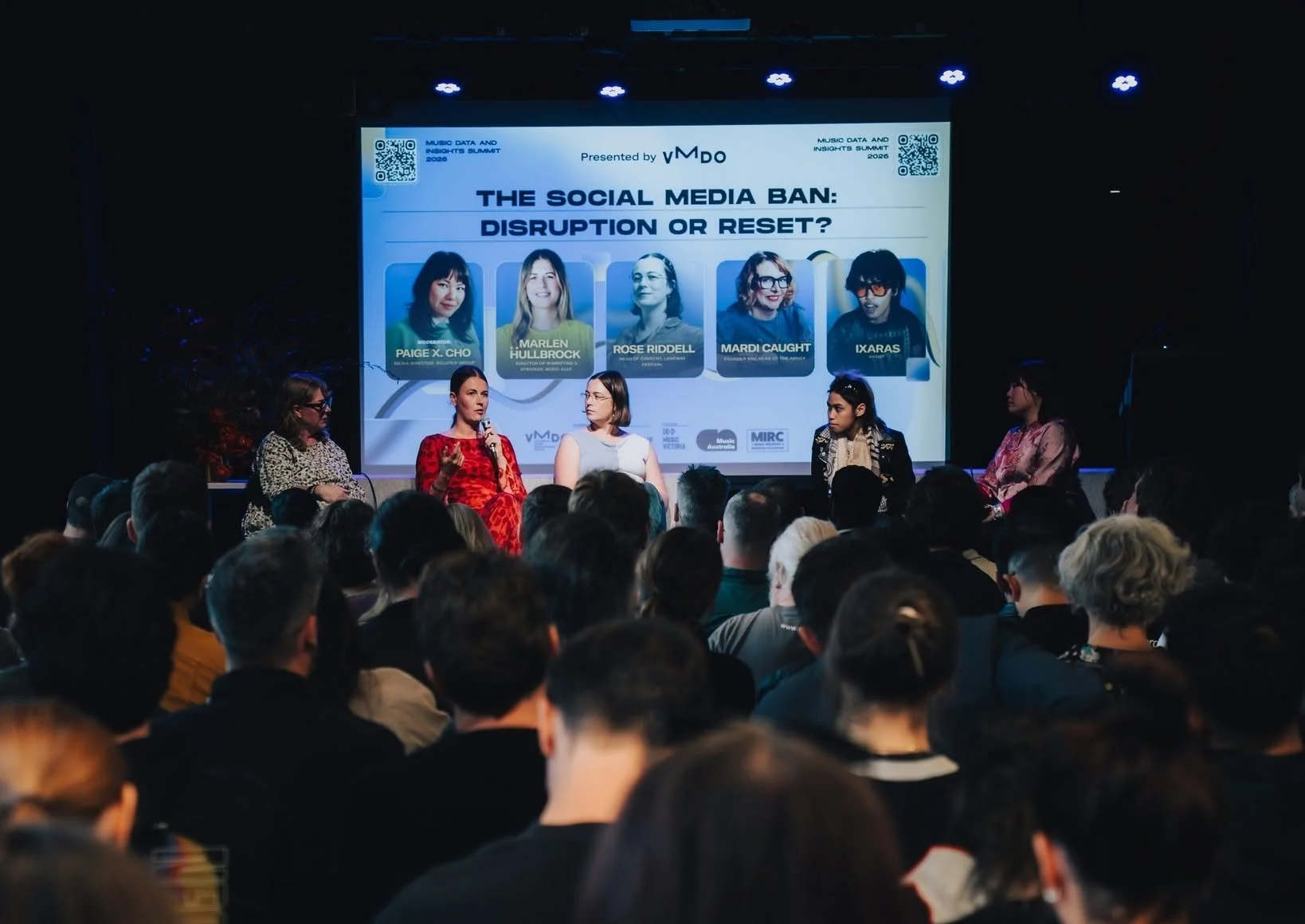
Photo credit: Casi Maria
Adolescence is a time when kids are exploring and testing their limits and discovering their identities, and they have always done risky things with or without the internet. Kids in my high school were giving each other aerosol burns for fun, and this was years before social media existed. Outright bans do not solve the issue. We should be focusing on providing safe and supportive environments both on and offline, giving kids media literacy and common sense, and making sure they feel like they can ask for help when they need it.
One thing that stood out during the panel was that every single panelist was pretty heavily against the increased minimum age, but when I asked the audience to do a show of hands for pro versus against, it was far more evenly split.
During the Q&A, someone even asked us on stage (five women, mind you) how the music industry was going to protect children against sex trafficking. My response was that the music industry cannot directly solve a global issue like that, and that it sits across the wider world, not just our sector. What we can do is make sure our workplaces are safe for young people who want to enter the industry as practitioners or performers.
It feels like that same thinking applies to the wider ban. A bit of nuance, a bit of realism, and remembering that the actual goal here is to keep young people safe.